Losing a tooth is an experience that goes beyond physical discomfort; it often impacts how you speak, eat, and feel about your social interactions. While traditional dentures and bridges have served patients for decades, they often fall short of replicating the natural stability of a real tooth.
Modern dental innovations have changed this narrative by providing a solution that mimics the entire tooth structure, from the root to the crown.
Choosing a dental implants specialist near you is the first step toward a permanent restoration that doesn’t just fill a gap. Still, it fully integrates with your body to provide a lifetime of support and a renewed sense of self-assurance.
What Makes A Dental Implant Feel Like A Natural Tooth?
The secret to the success of this technology lies in its ability to fuse with the jawbone. Unlike other options that sit on top of the gums, the dental implant procedure involves placing a small titanium post into the bone.
This post acts as an artificial root, stimulating the jaw and preventing the bone loss that typically follows tooth extraction.
Once the site has healed, a custom-crafted crown is attached, resulting in a restoration that looks, feels, and functions exactly like your original enamel.
Why Should You Consult A Dental Implants Specialist?
Precision is the most critical factor in the longevity of any oral restoration. When you visit a dental implants specialist near you, you are benefiting from advanced diagnostic tools like 3D CT scans that map out your exact bone density and nerve pathways.
This high level of expertise ensures that the implant is placed in the optimal position for both strength and aesthetics.
Specialized care also means your treatment plan is tailored to your specific health history, significantly increasing the success rate and ensuring the final result complements your natural facial structure.
How Do Implants Support More Extensive Tooth Replacement?
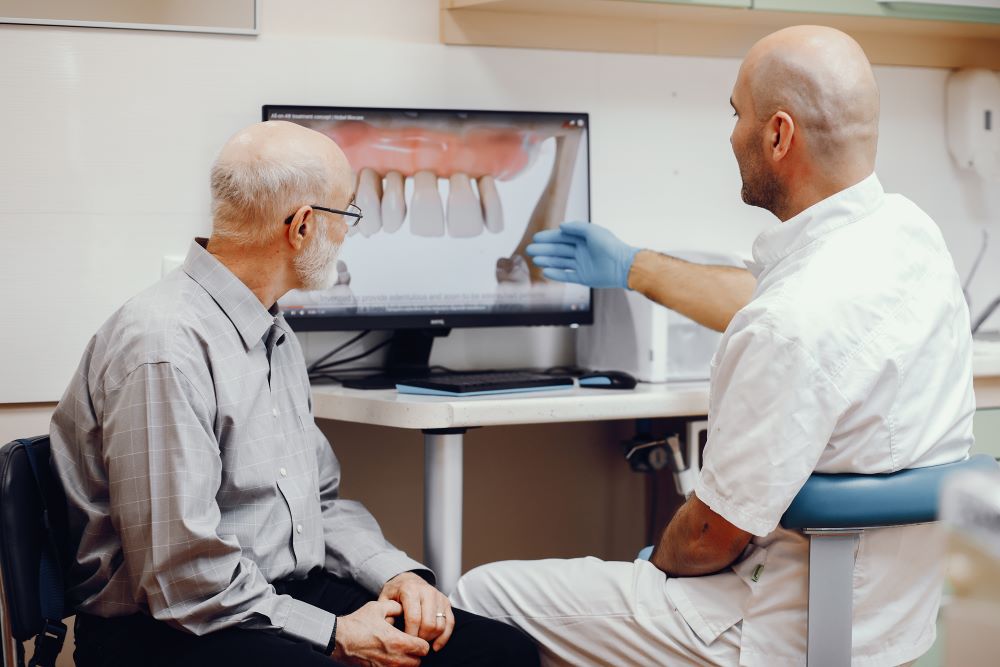
For those missing multiple teeth in a row, you do not necessarily need an individual implant for every single gap. You can explore dental implant bridges near you, which use two or more implant posts to support a row of prosthetic teeth.
This approach offers far more stability than a traditional removable bridge because it does not require the filing down of neighbouring healthy teeth.
It provides a fixed, non-slip solution that allows you to eat crunchy or chewy foods with total confidence, knowing your restoration is securely anchored.
What Should You Expect Regarding The Healing Process?
Many patients are curious about the duration of the journey from surgery to the final smile.
While the initial surgical phase is quick, the dental implant recovery time spans several months.
This period is necessary for “osseointegration,” the biological process where the bone grows around and bonds with the titanium post.
During this time, you may wear a temporary restoration, but the patience required is well worth it, as it results in a foundation that is arguably as strong as the natural tooth it replaced.
Comparison of Tooth Replacement Methods
| Feature | Dental Implants | Traditional Dentures |
| Stability | Fixed and permanent | Removable/May slip |
| Bone Health | Prevents bone loss | Bone continues to shrink |
| Longevity | 25+ years to life | Needs replacement every 5-7 years |
| Maintenance | Brushing and flossing | Requires soaking and adhesives |
Reclaiming Your Quality of Life
Restoring your smile is one of the most impactful investments you can make for your long-term health and happiness. By choosing a solution that replicates the strength of natural teeth, you protect your jaw and regain the ability to enjoy life without limitations.
At My New Teeth, we are passionate about helping our patients rediscover their smiles through expert restorative care. Our team is dedicated to providing a comfortable, life-changing experience tailored to your unique needs.
If you are ready to explore the world of permanent tooth replacement, contact us today to schedule your appointment.
FAQs
Is the dental implant procedure painful?
The surgery is performed under local anesthesia or sedation so that you won’t feel pain during the process, and post-operative discomfort is usually managed with standard over-the-counter medication.
How do I clean and care for my dental implants?
You treat them exactly like natural teeth by brushing twice a day and flossing regularly, along with attending your routine professional checkups.
Who is a good candidate for dental implants?
Several patients who have healthy gums and a sufficient bone density are good candidates for dental implants; even patients with bone loss can qualify after a bone grafting process.
Can dental implants fail?
While rare, failure is usually linked to smoking or poor oral hygiene; with proper care, implants have a success rate of over 95% over the long term.